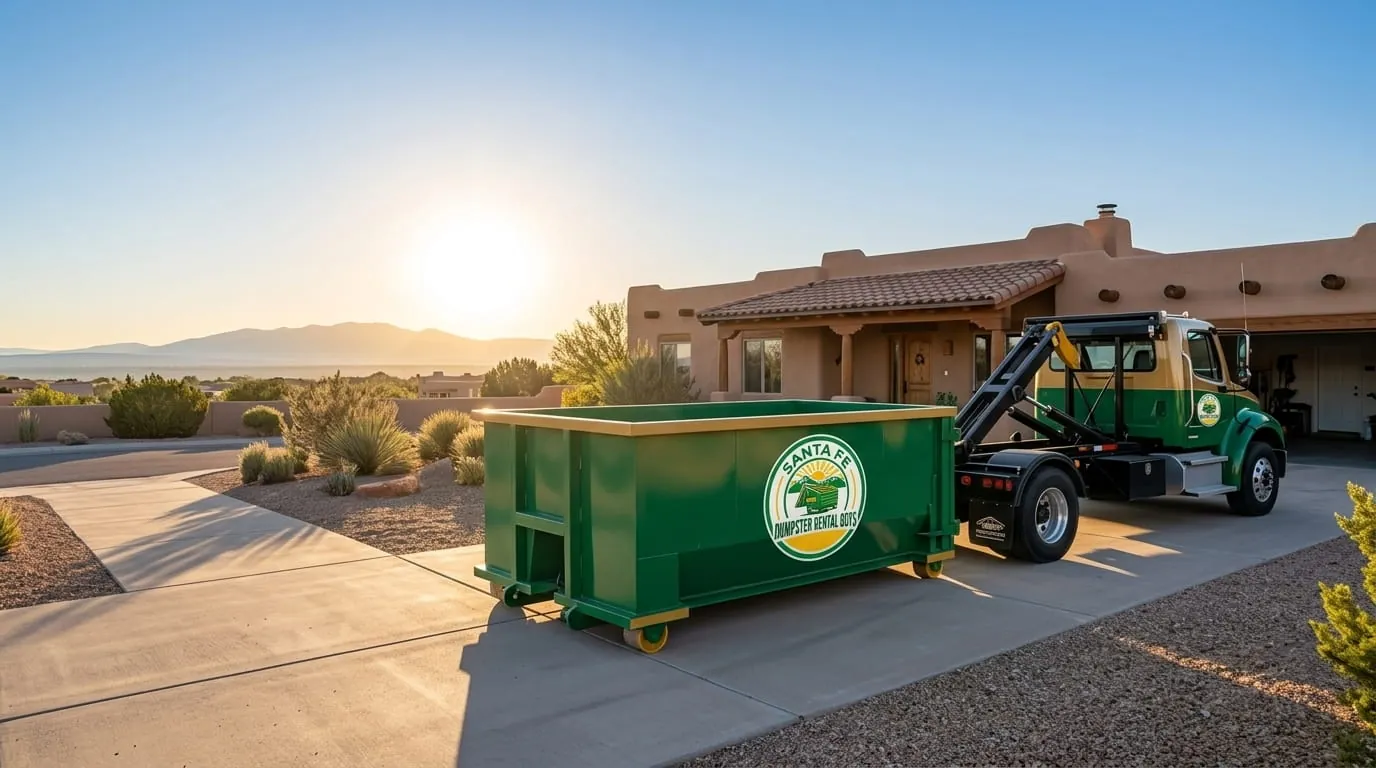
Replacing a roof is one of the biggest debris-generating jobs a Santa Fe homeowner will ever tackle. Whether you're pulling worn asphalt shingles off a foothills home in the Sangre de Cristos or scraping a failed built-up roof off a Pueblo-style adobe downtown, the tear-off produces a surprising amount of heavy, awkward waste. Get the dumpster size wrong and you're either paying for capacity you never use or, worse, watching your bin get red-tagged for going over weight. This guide walks through how to size a roll-off for a roofing tear-off the smart way, with the local realities of Santa Fe roofs baked in.
Why Roofing Debris Is All About Weight, Not Volume
The single biggest mistake people make when renting a dumpster for a roof job is thinking about how much space the debris takes up. Roofing waste is dense. A bundle of asphalt shingles weighs 60 to 80 pounds, and a single "square" of roofing (a 10-foot by 10-foot section, or 100 square feet) can produce 250 to 400 pounds of tear-off debris for a single layer. Stack two or three old layers on top of each other, which is common on older Santa Fe homes, and that number multiplies fast.
Roll-off dumpsters have two limits: the physical volume they can hold and the tonnage the truck is rated to haul. With light debris like cardboard or drywall, you'll fill the box long before you hit the weight cap. With roofing, it's the opposite. You'll blow past the weight limit while the dumpster still looks half empty. That's why a smaller bin is frequently the right call for tear-offs.
This is exactly why we steer most residential roofing customers toward a 10-yard dumpster or a 15-yard dumpster rather than the 20 or 30-yard boxes people assume they need. Those larger bins are built for bulky, lightweight material. For a heavy, compact load like shingles or tile, a smaller footprint keeps you safely under weight and keeps your flat rate predictable.
Estimating Debris by Roof Size and Layers
To size your dumpster, you need two numbers: the total squares of your roof and how many existing layers are coming off. Here's a practical way to estimate.
- Find your squares. Take your home's roofed footprint in square feet and divide by 100. A 2,000-square-foot single-story home with a low-slope roof is roughly 20 squares, though pitch, overhangs, and dormers add to that.
- Count the layers. Older Santa Fe homes sometimes carry two or even three layers of shingles, or a modern membrane laid over an old built-up roof. Each layer roughly multiplies your debris weight.
- Do the math. Estimate 250 to 400 pounds per square, per layer for asphalt. A 20-square roof with one layer is around 2.5 to 4 tons of debris. Two layers pushes you toward 5 to 8 tons.
As a rough field guide for asphalt shingle tear-offs: a 10-yard bin comfortably handles a single-layer roof up to about 15 to 20 squares. A 15-yard bin covers larger single-layer roofs or smaller two-layer jobs. Once you're into big multi-layer tear-offs, you may need to plan for a second haul or a swap rather than forcing everything into one oversized box that'll go overweight anyway.
Sizing for Santa Fe's Heavier Roof Types
Santa Fe's roofing mix is different from most of the country, and that changes the math. Our flat and low-slope Pueblo and Territorial-style homes rarely wear standard asphalt shingles. Instead you'll find:
- Built-up roofing (BUR) — the old "tar and gravel" systems still found on many adobe and mid-century flat roofs. The gravel ballast alone is heavy, and a full tear-off down to the deck is one of the densest loads you can generate.
- Foam and TPO/membrane roofs — spray polyurethane foam and single-ply membranes are common on flat roofs across town. The membrane itself is light, but tear-offs often include old substrate, wet insulation, and layers of prior coatings.
- Tile and concrete — clay and concrete tile on some Spanish and pitched-roof homes is extremely heavy, often heavier per square than a double layer of asphalt.
For gravel-laden built-up roofs and tile, weight climbs fast, so a smaller bin with a realistic weight allowance is the safe choice. For foam tear-offs, volume can matter more because wet, chunky insulation is bulkier, so a 15-yard box sometimes fits better. When in doubt, tell us the roof type and square footage when you call and we'll match the bin to the actual load. That's the whole point of our roofing dumpster rental service — sizing for local materials, not generic guesses.
Timing Your Tear-Off Around the Monsoon
Roof replacement in Santa Fe has a rhythm, and it's driven by weather. The summer monsoon, typically July into September, is what exposes failing flat roofs. Ponding water, blistered foam, and leaks that show up after a hard afternoon storm send a wave of homeowners looking to replace before the next season. Many people plan tear-offs for late spring or early fall to dodge both the monsoon downpours and the deep winter freeze.
The scheduling lesson for your dumpster: an open tear-off is a race against the sky. You do not want shingles or an exposed deck sitting open when a monsoon cell rolls over the foothills. Because we run same-day, flat-rate service, you can have a bin on-site the morning your crew starts and get it hauled promptly when the job wraps, so you're never staging debris through a storm or leaving an open roof waiting on equipment.
A Few Tear-Off Tips That Save You Weight and Mess
- Tarp the ground and shrubs along the eaves before you start. Torn shingles shed grit and nails everywhere.
- Work in sections and load the bin as you go rather than piling debris on the roof or lawn.
- Break tear-off into layers if you have multiples, and consider a mid-job swap so no single load goes overweight.
- Run a magnetic sweep of the driveway, walkways, and yard for nails when you finish. Santa Fe's dirt driveways hide them well.
Protecting Your Driveway and Property
Where the dumpster sits matters, especially on Santa Fe's older lots. Many homes have narrow flagstone or brick-paver drives, unpaved caliche approaches, or portals and landscaping close to the house. A loaded roofing bin is heavy, so a little planning prevents cracked pavers or ruts.
- Put down protection. Lay plywood or planks under the roll-off's wheels and contact points to spread the load on driveways and softer ground.
- Pick a firm, level spot. Avoid soft caliche that turns to muck after a monsoon rain, and steer clear of septic lines and shallow utilities.
- Keep the drop path clear. Overhanging cottonwoods, low portales, and tight courtyards can limit where the truck can place the bin. Measure your access before you call.
- Mind the nails. Position the bin so tear-off debris drops straight in, minimizing the trail of loose fasteners across your property.
Permits, HOA, and Santa Fe's Historic Districts
Most Santa Fe roofing projects with a dumpster placed on your own private driveway or property don't require a special permit for the bin itself. The considerations kick in when placement or the roof work touches public or regulated space.
- Street or right-of-way placement. If the only spot for the roll-off is the street or public right-of-way, the city may require a permit or barricading. Placing it on your own property avoids this entirely, which is almost always the better option.
- Historic districts. Homes in the downtown Historic District, and other historic-review overlays, can face additional rules on the roofing work itself, particularly for visible materials and roof profiles on Territorial and Pueblo-style homes. That's a roofing-scope issue more than a dumpster one, but confirm with the city's Historic Districts Review Board before you commit to materials.
- HOA covenants. Many foothill and planned communities restrict how long a dumpster can sit, where it can be placed, and roofing color or material. Check your covenants and give neighbors a heads-up.
When you book with us, we'll talk through placement so your bin ends up in the right, compliant spot the first time.
Ready to Size Your Roofing Dumpster?
Every roof is a little different, and the right bin comes down to your squares, your layers, and what's actually up there. Tell us the details and we'll match you to the correct size at a flat rate, dropped the same day. Call Santa Fe Dumpster Rental Guys at (505) 557-2849 or reach out through our contact page to get your roofing tear-off rolling.

Founder, Santa Fe Dumpster Rental Guys — sharing straight advice from more than 15 years of local hauling experience.