Clearing out a home after a loved one has passed, or helping a parent downsize from a house they have lived in for decades, is one of the hardest jobs most families ever face. It is physical work layered on top of grief, and in Santa Fe it often carries an extra weight: these are homes full of history. A rambling adobe near Canyon Road, a casita out on the county roads, a retiree's second home tucked into the foothills. Every drawer holds a decision. This checklist is meant to make those decisions a little easier, giving you a clear order of operations, a compassionate framework for sorting a lifetime of belongings, and honest guidance on the practical end of things, including the right dumpster when the volume becomes real.
Start With Paperwork, People, and Permission
Before a single box is packed, get your footing. An estate cleanout is legally and emotionally different from an ordinary move, and rushing it is how families lose things they can never recover.
If you are the executor or personal representative, your authority to distribute or dispose of property usually flows from the will and, in many cases, the probate court. Confirm where you stand before you empty rooms. Even in the most amicable families, disposing of items before that authority is settled can create real conflict.
- Locate the essential documents first: the will, trust paperwork, deeds, vehicle titles, insurance policies, tax returns, and financial statements. In older Santa Fe homes these are often tucked in odd places, a bedroom closet, a fireproof box, even taped inside a drawer.
- Secure valuables immediately: jewelry, cash, firearms, coins, and small artwork. Remove them from the home or lock them away on day one.
- Notify and align the family: agree on who is involved, who has final say, and how disagreements will be resolved before the emotional sorting begins.
Do not throw away any paper until you have skimmed it. Deeds, savings bonds, stock certificates, and handwritten notes hide inside stacks of what looks like junk mail.
Build a Realistic Timeline (and Protect Your Energy)
Families almost always underestimate how long a full cleanout takes. A modest condo might be a long weekend. A family adobe that has been lived in for forty years, with a garage, a shed, and a casita out back, can take several weeks of steady work.
Give yourself a timeline that respects both the deadline and the grief. If the property is being sold or the estate needs to close by a certain date, work backward from it. If there is no hard deadline, resist the urge to power through in a single exhausting sprint.
A workable pace
- Week one: paperwork, valuables, and a walk-through of every room to understand the scope.
- Weeks two to three: room-by-room sorting into clear categories.
- Final stretch: donation and sale pickups, hauling, and the last sweep of the empty house.
Work in daylight when you can, take breaks, and know that some days you will get through three boxes and cry over two of them. That is normal. That is the work.
The Four-Category Sort: Keep, Give, Sell, Let Go
The heart of any cleanout is sorting, and the simplest system is the most reliable. Work one room at a time, fully finishing a space before moving on, and place every item into one of four categories. Label boxes and use painter's tape on furniture so nothing gets confused.
Keep and keepsakes
Start with the emotional heart. Distribute the pieces that carry memory, the santos and retablos, the wedding ring, the letters, the photographs. Encourage family members to choose a few meaningful items rather than trying to keep everything. A single well-loved piece often honors a person more than a storage unit full of furniture no one uses.
Give: donation in Santa Fe
Usable clothing, housewares, and furniture in good condition can do real good here. Habitat for Humanity ReStore takes furniture, appliances, and building materials, and the proceeds stay local. Nonprofit thrift shops around town welcome gently used clothing and household goods, and many will arrange pickup for larger loads. Keep donation receipts, which matter for the estate's taxes.
Sell: appraisal, estate sales, and consignment
Santa Fe's art and antiques market is a genuine advantage. Before anything is sold or discarded, have a professional look at the art, Native pottery, Spanish Colonial pieces, rugs, and jewelry.
- Get an appraisal for anything that might carry significant value. A quick opinion can save you from selling a valuable piece for a fraction of its worth.
- Consider an estate sale company for a house full of goods. They price, stage, and run the sale for a percentage.
- Use consignment for individual quality furniture and art, which Santa Fe's galleries and consignment shops are well equipped to place.
Let go
Everything else, the broken, the stained, the truly worn out, moves to disposal. Be honest here. Holding onto things that no one wants and that carry no memory only prolongs the process.
Handling the Hard-to-Handle Items
Some categories deserve extra care because they carry risk, value, or sentiment that a simple sort can miss.
- Digital and financial life: old computers and phones may hold photos and account access. Set them aside for a knowledgeable family member rather than trashing them.
- Documents with personal data: shred anything with account numbers or a Social Security number rather than tossing it in the open.
- Hazardous materials: paint, solvents, propane, and chemicals common in a garage or shed cannot go in a dumpster and need proper disposal through the county's household hazardous waste channels.
- Medications: dispose of prescriptions through a pharmacy take-back program, never the trash.
Once the keepsakes, donations, and sale items are gone, what remains is often a large volume of ordinary debris, worn furniture, mattresses, broken shelving, decades of accumulation from the garage and casita. This is where a plan for hauling matters. For homes packed to the rafters, our estate cleanout service is built exactly for this moment, and for lighter loads or a few bulky pieces, straightforward junk removal may be all you need.
Choosing the Right Dumpster for the Volume
When you reach the disposal stage, guessing at size is the most common mistake. Order too small and you pay for a second haul; order too large and you pay for air. The right size depends on the home and how much is genuinely being kept or sold versus thrown away.
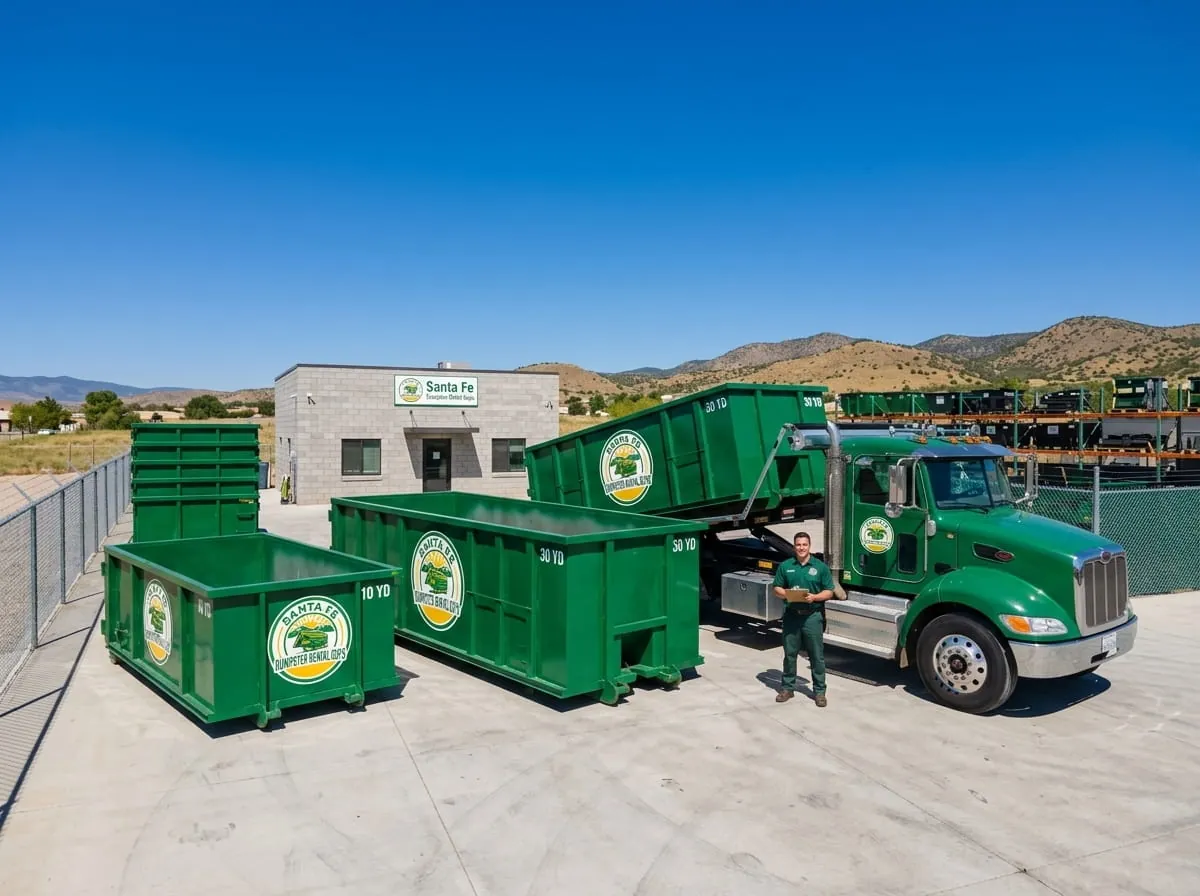
- 10-yard: a single room, a decluttered condo, or a light cleanout where most items are donated or sold.
- 15-yard: a small home or a heavier single-story cleanout.
- 20-yard: the workhorse for most estate cleanouts. A 20-yard dumpster handles a full house of furniture, boxes, and general debris without overwhelming a driveway.
- 30-yard: a large multi-generational adobe with a garage, shed, and casita, or a home where very little is being kept.
A few Santa Fe specifics are worth planning around. Narrow historic streets and tight portal-shaded driveways can limit where a roll-off sits, so clear a straight, level spot with room for the truck. If you are unsure, a quick phone call describing the home and the load is faster and more accurate than any online calculator. We offer flat-rate pricing and same-day drop-off, so you are not left waiting when the family has traveled in to do this work on a tight window.
Bringing It to a Close
When the rooms are empty, do a final walk-through in daylight. Check the backs of closets, the attic, the crawlspace, and behind the water heater, the places where one last box always hides. Take photographs of the empty home if the estate or a sale requires them. Then give yourself a moment. You did something genuinely hard, and you did it with care.
Clearing a family home in Santa Fe is not just hauling. It is honoring a life and a place, and choosing a partner who understands that makes the practical end far lighter. When you are ready for the dumpster or the haul, Santa Fe Dumpster Rental Guys is local, licensed, and here to help.
Call us at (505) 557-2849 for flat-rate, same-day dumpster rental across Santa Fe and Santa Fe County, or reach out through our contact page to talk through your cleanout.
Founder, Santa Fe Dumpster Rental Guys — sharing straight advice from more than 15 years of local hauling experience.